

Introduction
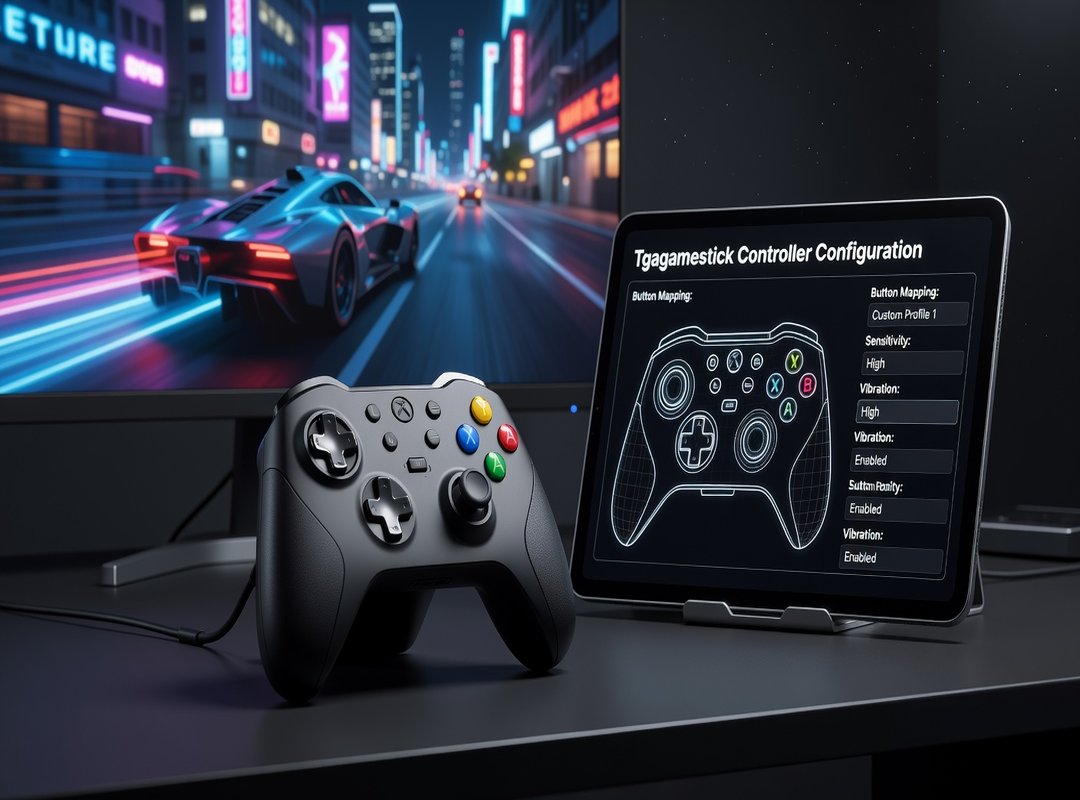
Retro gaming is a blast from the past, and the Tgagamestick brings that excitement right to your fingertips. Whether you’re a seasoned gamer or just starting out, mastering the Tgagamestick Controller How to Use is key to unlocking a world of fun. This article is your complete guide to using the Tgagamestick controller. You’ll learn everything from setting it up and getting to know the basic controls, to advanced tips and even troubleshooting. Let’s dive in and unleash your gaming potential!
First-Time Setup: Connecting Your Tgagamestick Controller
When you first get your Tgagamestick Controller How to Use, it’s all about getting set up right. Let’s dive in.
Start by unboxing everything. You’ll find the controller, a receiver, and maybe some batteries. If it’s rechargeable, plug it in now. Charge it fully before use. It usually takes about 2-3 hours.
Next, insert the batteries if needed. Make sure they’re in the right way. The plus and minus signs on the battery should match the ones in the compartment. Close it up tightly.
Now, let’s pair it. Plug the receiver into your console. Turn on the controller. Most times, it pairs automatically. If not, press the sync button on both the controller and the receiver. They should connect in seconds.
Here’s what’s typically in the box:
- Tgagamestick controller
- Wireless receiver
- Instruction manual
- Batteries or charging cable
Pro-tip: Plug in the receiver before turning on your console. This helps with a stable connection from the start. Trust me, it makes a difference.
Navigating the Basics: Understanding the Tgagamestick Controller Layout
Let’s dive into the Tgagamestick Controller How to Use. The layout is pretty straightforward, and I’ll break it down for you.
First up, the D-Pad. It’s that cross-shaped button on the left. You use it to move your character or navigate menus. Simple, right? Next to it, you’ll find the analog stick. This is great for smooth, precise movements in games.
Now, the action buttons: A, B, X, and Y. These are your main controls. A is often used for jumping, B for actions like attacking, X for special moves, and Y for other interactions. They’re color-coded, so you can easily spot them.
The shoulder buttons, L1 and R1, sit on top. They’re perfect for quick actions like shooting or switching weapons. Don’t forget the ‘Select’ and ‘Start’ buttons. ‘Select’ helps you choose options in menus, while ‘Start’ pauses the game. Both are super handy for navigating retro game menus.
To get started with the Tgagamestick, press ‘Start’ to open the main menu. Use the D-Pad or analog stick to scroll through the list of games. Press ‘A’ to select a game and start playing. Easy as pie!
If you’re playing with a friend, make sure to check the controller numbers. Player 1 is usually the first one connected, and Player 2 is the second. Look for the labels on the back of the controllers to be sure.
That’s all you need to know to get gaming. Enjoy!
Pro-Level Gameplay: Advanced Tgagamestick Controller Functions
Dive into the world of Tgagamestick Controller How to Use and unlock some hidden gems that can seriously up your gaming game. Imagine you’re in the middle of a heated battle, and suddenly, you need to exit the game. No sweat! Just hold down the ‘Start’ and ‘Select’ buttons simultaneously. You’ll hear a soft beep, and the screen will fade, whisking you back to the main menu.
Save states are a lifesaver for retro gamers. To save your progress, press ‘L’ and ‘R’ together. It’s like capturing a snapshot of your game at that exact moment. When you want to load it, just hit the same combo again. The controller vibrates gently, and you’re right back where you left off.
Setting up a second Tgagamestick for two-player action is a breeze. Plug in the second controller, and it automatically syncs. The lights on both controllers blink in unison, signaling they’re ready to go. Now, you and a friend can dive into co-op or competitive play with no fuss.
There are other nifty features too. Pressing ‘Start’ and ‘B’ lets you rewind gameplay, almost like a VHS tape. It’s perfect for those “what if” moments. And if you ever get stuck, holding ‘A’ and ‘X’ brings up a quick guide, helping you navigate through tricky spots. These little touches make the Tgagamestick a joy to use, enhancing every gaming session.
Troubleshooting Common Tgagamestick Controller Problems
Controller is not connecting or is unresponsive.
First, try re-pairing the controller. Check if the batteries are low and replace them if needed. Make sure the USB receiver has a clear line of sight to the controller. Sometimes, moving the receiver to a different USB port helps too.
Input Lag or Delayed Response.
Move closer to the receiver. It’s also a good idea to remove any potential sources of wireless interference, like other electronic devices. This can really help improve the connection.
Buttons are Sticking or Not Registering.
Clean the buttons with a soft, slightly damp cloth. If that doesn’t work, you might need to replace the controller. Regular cleaning can extend its life and keep it working smoothly.
These tips should help you get back to gaming in no time. Remember, Tgagamestick Controller How to Use guides can offer more detailed steps if you need further assistance.
With the Tgagamestick controller, you’ve now mastered the essentials of setup, from connecting it to your device to navigating through the basic and advanced controls. You’re also equipped with troubleshooting tips to overcome any hiccups along the way. This guide has provided you with everything you need to dive into a world of gaming nostalgia. So, what are you waiting for? Grab your Tgagamestick, fire up your favorite retro games, and let the good times roll! ????️✨
 Ask David Kaplantopherr how they got into latest gaming news and you'll probably get a longer answer than you expected. The short version: David started doing it, got genuinely hooked, and at some point realized they had accumulated enough hard-won knowledge that it would be a waste not to share it. So they started writing.
What makes David worth reading is that they skips the obvious stuff. Nobody needs another surface-level take on Latest Gaming News, Player Strategy Guides, Expert Commentary. What readers actually want is the nuance — the part that only becomes clear after you've made a few mistakes and figured out why. That's the territory David operates in. The writing is direct, occasionally blunt, and always built around what's actually true rather than what sounds good in an article. They has little patience for filler, which means they's pieces tend to be denser with real information than the average post on the same subject.
David doesn't write to impress anyone. They writes because they has things to say that they genuinely thinks people should hear. That motivation — basic as it sounds — produces something noticeably different from content written for clicks or word count. Readers pick up on it. The comments on David's work tend to reflect that.
Ask David Kaplantopherr how they got into latest gaming news and you'll probably get a longer answer than you expected. The short version: David started doing it, got genuinely hooked, and at some point realized they had accumulated enough hard-won knowledge that it would be a waste not to share it. So they started writing.
What makes David worth reading is that they skips the obvious stuff. Nobody needs another surface-level take on Latest Gaming News, Player Strategy Guides, Expert Commentary. What readers actually want is the nuance — the part that only becomes clear after you've made a few mistakes and figured out why. That's the territory David operates in. The writing is direct, occasionally blunt, and always built around what's actually true rather than what sounds good in an article. They has little patience for filler, which means they's pieces tend to be denser with real information than the average post on the same subject.
David doesn't write to impress anyone. They writes because they has things to say that they genuinely thinks people should hear. That motivation — basic as it sounds — produces something noticeably different from content written for clicks or word count. Readers pick up on it. The comments on David's work tend to reflect that.