
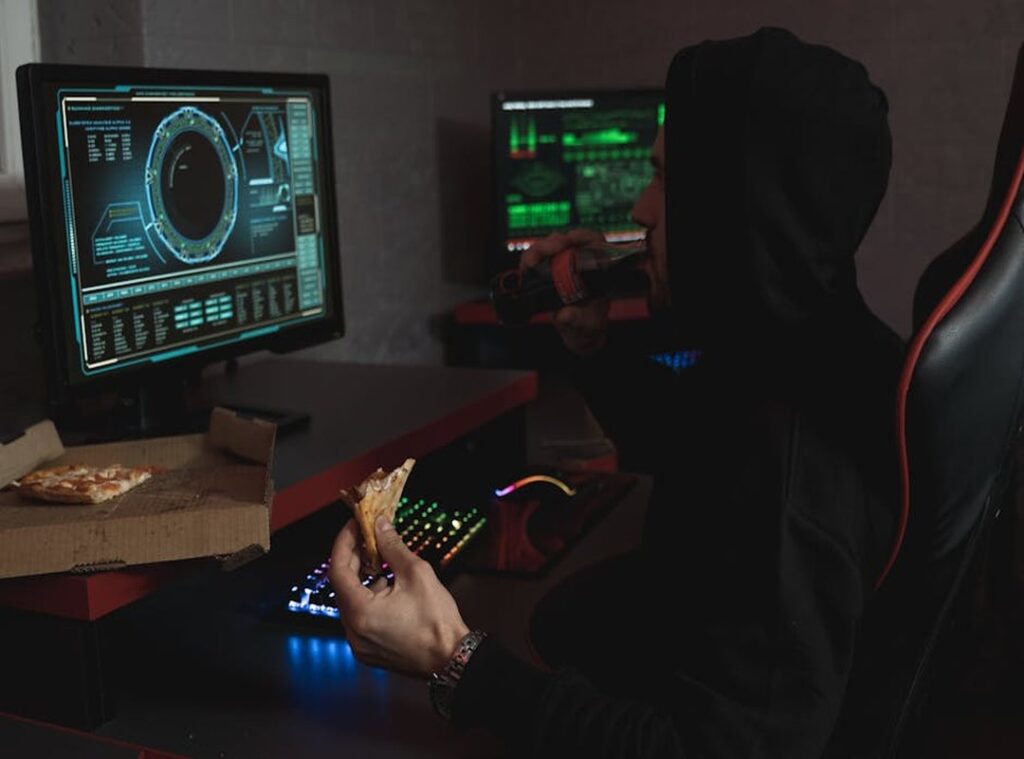
You’re stuck.
You play every day. You watch the pros. You even record your matches and review them.
But your rank isn’t moving. Your aim feels sluggish. Your reaction time?
Still slow.
That’s not you failing. That’s your setup holding you back.
I’ve spent years testing hardware, software, and in-game settings (not) for fun, but to find what actually moves the needle.
Not theory. Not hype. Real changes that show up in your K/D ratio, your win rate, your confidence.
Most “gaming tips” are recycled nonsense. Gaming Hacks Thehaketech is different.
It’s built on data, not dogma.
You’ll walk away with three specific tweaks you can make today. One in your mouse settings. One in your GPU control panel.
One in the game’s config file.
All of them tested. All of them working.
No fluff. No filler. Just faster reflexes.
Improve Your Rig: Unlocking Performance You Already Own
I used to think I needed a new GPU.
Turns out my monitor was stuck at 60Hz. And I’d never checked.
Your gear is already faster than you think.
You just have to stop ignoring the settings.
Start with your monitor. Open Windows Settings > System > Display > Advanced display. Click your monitor, then “Refresh rate.” Is it set to the max?
If not, change it. Then open your NVIDIA Control Panel or AMD Adrenalin. Look under Display > Refresh Rate.
It must match what’s in Windows. If it doesn’t, one of them is lying. (Spoiler: it’s usually Windows.)
Mouse settings? Let’s fix that too. DPI is hardware.
In-game sensitivity is software. Multiply them for eDPI. Find one number you like.
Then never change it. I use 800 DPI × 2.0 = 1600 eDPI. It’s muscle memory now.
Also: set polling rate to 1000Hz in your mouse software. Anything lower feels laggy once you notice.
Audio matters more than most people admit. Install Equalizer APO. Use a preset that cuts bass below 100Hz and lifts 1 (3kHz.) Footsteps pop.
Gunshots don’t drown everything out. You’ll hear enemies before you see them.
Disable Boost pointer precision in Windows Mouse Settings. This is non-negotiable. It warps your aim.
Always has.
I learned this the hard way (losing) three ranked matches because my crosshair drifted mid-flick. The fix took 90 seconds. My aim improved overnight.
This guide covers the rest. Including how to spot hidden input lag in your chain.
Gaming Hacks Thehaketech isn’t about buying more. It’s about using what you own like it’s expensive. Because it is.
The Settings Deep Dive: Where Your Aim Actually Lives
I used to crank everything to Ultra. Felt cool. Then I lost a 1v5 in Valorant because I couldn’t see the guy crouching behind that low wall.
Shadows? Turn them Off. Not Low.
Off. That shadow under the crate isn’t moody. It’s a hiding spot you can’t scan.
You’re not losing atmosphere. You’re gaining reaction time.
Texture Filtering matters more than people admit. Set it to Anisotropic 16x. It doesn’t cost FPS.
It just makes distant angles sharper. So you spot the flick before they finish it.
Anti-aliasing is a trap. FXAA looks soft. TAA adds input lag.
MSAA eats GPU. Skip it unless your rig is overkill. Your mouse feels slower with TAA on.
Try it both ways. You’ll feel it.
NVIDIA Reflex? Turn it On. AMD Anti-Lag?
Same thing. It’s one toggle in the driver panel or in-game graphics menu. Not buried.
Not optional if you care about latency.
Field of View? Valorant locks it. Apex doesn’t.
Higher FOV means more peripheral info (but) smaller targets. Lower FOV makes enemies bigger but blinds you to flanks. Start at 104.
Adjust in 2-point increments. Play three matches each. Stop when your head stops turning after the kill.
You don’t need 300 FPS to win. You need consistent 144+ and zero visual noise.
I dropped shadows and enabled Reflex last month. My crosshair landed faster (not) because I practiced more, but because the game stopped lying to me.
Gaming Hacks Thehaketech isn’t about shortcuts. It’s about removing friction between your eyes and your trigger finger.
That’s where wins live.
Hacking Your Gameplay Loop: How to Practice and Think Smarter

I stopped grinding matches years ago. It didn’t make me better (it) just made me tired.
Shift from tech to technique. That means dropping the “more hours = better” myth. What matters is deliberate practice.
You know that feeling when you reload mid-fight and wonder why your aim felt off? That’s not RNG. That’s muscle memory failing because you never trained it right.
Aim trainers help. Not as a gimmick (as) a scalpel. I use Aim Lab with this 15-minute warm-up:
I go into much more detail on this in Gaming News Thehaketech.
5 minutes tracking (slow, smooth mouse movement)
5 minutes flicking (short, sharp corrections)
So 5 minutes speed (reaction + precision under time)
Don’t skip the warm-up. Your hands aren’t ready. Your brain isn’t either.
Then review your VODs (your) own gameplay. Not for highlights. For mistakes.
Ask three questions every time:
Why did I die? What could I have done differently? Was my crosshair placed correctly before the engagement?
That last one catches 70% of deaths. I timed it.
The OODA Loop fits here too. Observe. Orient.
Decide. Act. It’s not military jargon.
It’s how pros stay ahead. You observe enemy movement, orient to map flow, decide before they peek, then act faster than they react.
You’re not slower. You’re just skipping steps.
For more on how real players build habits like this, check out the latest Gaming News Thehaketech updates.
Gaming Hacks Thehaketech won’t fix your aim. But doing this will.
Start tomorrow. Not next week. Not after you “get back into it.” Tomorrow.
Important Tools and Tweaks Outside the Game
I run three things outside the game. Nothing more. Nothing less.
Discord is one of them. But leave hardware acceleration on? That’s a mistake.
Turn it off. Also disable in-game overlays. They add input lag (you) feel it in fast turns or quick reloads.
MSI Afterburner with RivaTuner sits in my tray. I watch FPS, GPU load, and frame times. When stutters hit, I know if it’s the GPU spiking or the CPU choking.
These aren’t cheats. They’re diagnostics. Like checking your car’s oil before a race.
Gaming Hacks Thehaketech sounds sketchy until you realize it’s just smart prep. Not shortcuts.
I check this post weekly for patches that break or fix these tools. (Turns out, Discord updates sometimes re-let hardware acceleration without telling you.)
One Change. One Win.
I’ve been stuck too. Hours in the chair. Same rank.
Same frustration.
You’re not broken. Your setup is. Your practice is.
And nobody told you that until now.
This isn’t about grinding harder.
It’s about fixing one thing. right now. That’s slowly dragging your aim, reaction, and confidence down.
Like your monitor’s refresh rate. Or your mouse polling rate. Or even just lowering background apps before a match.
Pick Gaming Hacks Thehaketech. Try one tip. Test it in your next 10 minutes of play.
You’ll feel the difference. Not tomorrow. Not after “enough practice.” Now.
Your skill ceiling isn’t fixed.
It’s just waiting for you to stop ignoring the basics.
Go fix that one thing.
Then come back when you’re ready for the next.
 Ask David Kaplantopherr how they got into latest gaming news and you'll probably get a longer answer than you expected. The short version: David started doing it, got genuinely hooked, and at some point realized they had accumulated enough hard-won knowledge that it would be a waste not to share it. So they started writing.
What makes David worth reading is that they skips the obvious stuff. Nobody needs another surface-level take on Latest Gaming News, Player Strategy Guides, Expert Commentary. What readers actually want is the nuance — the part that only becomes clear after you've made a few mistakes and figured out why. That's the territory David operates in. The writing is direct, occasionally blunt, and always built around what's actually true rather than what sounds good in an article. They has little patience for filler, which means they's pieces tend to be denser with real information than the average post on the same subject.
David doesn't write to impress anyone. They writes because they has things to say that they genuinely thinks people should hear. That motivation — basic as it sounds — produces something noticeably different from content written for clicks or word count. Readers pick up on it. The comments on David's work tend to reflect that.
Ask David Kaplantopherr how they got into latest gaming news and you'll probably get a longer answer than you expected. The short version: David started doing it, got genuinely hooked, and at some point realized they had accumulated enough hard-won knowledge that it would be a waste not to share it. So they started writing.
What makes David worth reading is that they skips the obvious stuff. Nobody needs another surface-level take on Latest Gaming News, Player Strategy Guides, Expert Commentary. What readers actually want is the nuance — the part that only becomes clear after you've made a few mistakes and figured out why. That's the territory David operates in. The writing is direct, occasionally blunt, and always built around what's actually true rather than what sounds good in an article. They has little patience for filler, which means they's pieces tend to be denser with real information than the average post on the same subject.
David doesn't write to impress anyone. They writes because they has things to say that they genuinely thinks people should hear. That motivation — basic as it sounds — produces something noticeably different from content written for clicks or word count. Readers pick up on it. The comments on David's work tend to reflect that.