
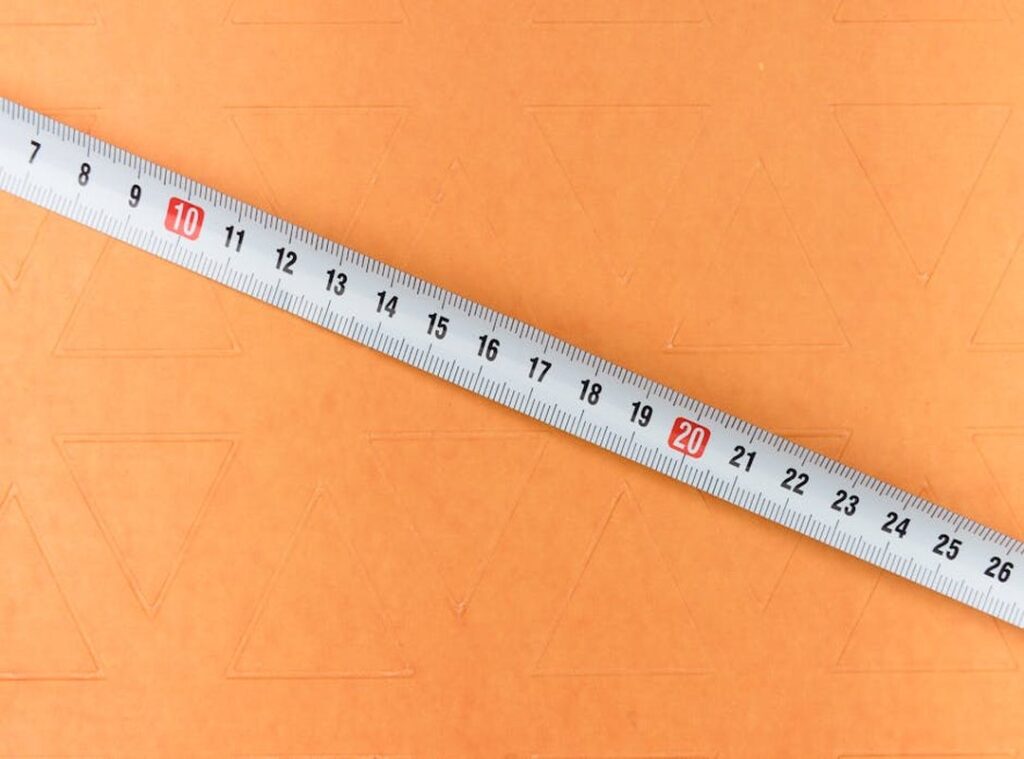
46 inches is equal to 116.84 centimeters.
You might need this conversion for things like TV screens, furniture, or even kitchen gadgets. It’s a common one.
Understanding it is simple once you know the key number that connects inches and centimeters.
This guide will give you the answer and show you the exact formula to convert any inch measurement to centimeters in seconds.
We’ll also cover some practical, everyday situations where this conversion comes in handy. You might be surprised how often it pops up.
The Simple Formula: How to Convert Inches to Centimeters Yourself
Let’s get straight to it. The single most important value for this conversion is that 1 inch is officially defined as exactly 2.54 centimeters.
The universal formula is simple:
Centimeters = Inches × 2.54.
Now, let’s walk through the specific calculation for 46inch to cm. It’s just a matter of multiplying 46 by 2.54.
46 inches multiplied by 2.54 equals 116.84 centimeters.
Why does this formula work every time? Because it’s based on the international standard for the inch. This standardization ensures consistency and accuracy across all conversions.
Think of the 2.54 multiplier as a ‘translation key’ between two different measurement languages. Just like how you might use a dictionary to translate words from one language to another, 2.54 helps you translate inches to centimeters.
For context, here’s the reverse formula:
Inches = Centimeters / 2.54.
This way, you can easily go back and forth between the two units. No need to memorize anything complicated. Just remember 2.54 and you’re set.
Practical Uses: Where You’ll Encounter This Measurement
Let’s get real. 46 inches is a common size for large TVs, guitar cases, or the width of a small loveseat.
Imagine you’re shopping for a new TV and you see “46 inches” listed. It’s not just a number; it’s the difference between a cozy viewing experience and one that feels overwhelming in your space.
In the Kitchen and Home
In the kitchen, 46 inches (116.84 cm) might be the length of a kitchen island, the height of a baker’s rack, or the width of a large roll of parchment paper.
These measurements matter. When you’re planning a kitchen layout, knowing the exact dimensions can save you from buying something that just won’t fit.
International Shopping Woes
Have you ever tried to buy a product online from an international seller? The frustration is real. You see a great deal on a kitchen appliance, but the dimensions are in metric.
Knowing that 46inch to cm is 116.84 cm can be a lifesaver. It helps you make sure that the item will actually work in your space.
Specific Scenarios
Imagine you’re following a European recipe that calls for rolling dough to a 115 cm length. Knowing that’s about 45.3 inches helps you visualize the task correctly.
It’s the little things like this that can make or break a recipe.
DIY Projects
DIY projects are another area where this conversion is crucial. Whether you’re building shelves or cutting fabric, switching between imperial and metric measurements is often necessary.
Getting the right measurements can mean the difference between a project that looks professional and one that looks like a hot mess.
So, next time you’re dealing with these measurements, remember: a little bit of knowledge goes a long way.
Quick-Reference Conversion Chart: Inches to CM at a Glance
When you need quick estimates, a chart is often faster than a calculator. Let’s dive into a clean, two-column table that shows inches on the left and centimeters on the right.
| Inches (in) | Centimeters (cm) |
|---|---|
| 40 | 101.60 |
| 41 | 104.14 |
| 42 | 106.68 |
| 43 | 109.22 |
| 44 | 111.76 |
| 45 | 114.30 |
| 46 | 116.84 |
| 47 | 119.38 |
| 48 | 121.92 |
| 49 | 124.46 |
| 50 | 127.00 |
To use this chart, just find the inch value you’re interested in and read across to see the equivalent in centimeters. For example, if you need to convert 46 inches to cm, you can quickly see it’s 116.84 cm.
This chart is a practical tool for anyone who needs to make quick conversions. It’s especially useful for DIY projects, crafting, or even when you’re shopping online and need to understand measurements.
All centimeter values are rounded to two decimal places for convenience. This makes it easy to get a close estimate without needing a calculator.
If you’re looking for more tips on how to survive in different scenarios, check out the beginners guide to surviving in open world survival games.
A Quick Look at Imperial vs. Metric Systems

The inch is part of the Imperial system, which is used primarily in the United States.
On the other hand, the centimeter is part of the Metric system, widely adopted by most of the world and in all scientific fields.
One key difference is that the metric system is base-10. This makes calculations for scaling up or down, like from millimeters to centimeters to meters, much simpler.
Being comfortable with both systems is a valuable skill. It’s useful for travel, online shopping, and understanding global information.
For example, if you need to convert 46inch to cm, knowing both systems helps.
So, why not take a moment to brush up on both? You’ll find it comes in handy more often than you think.
Mastering Your Measurements
Converting 46inch to cm, or any inch value, is as simple as multiplying by 2.54.
Restated clearly: 46 inches equals 116.84 cm.
This knowledge is incredibly practical, from buying a new TV to following an international recipe.
Feel free to bookmark the page with the conversion chart for any future measurement needs.
You now have the tool and the knowledge to handle any inch-to-centimeter conversion with ease.
 Ask David Kaplantopherr how they got into latest gaming news and you'll probably get a longer answer than you expected. The short version: David started doing it, got genuinely hooked, and at some point realized they had accumulated enough hard-won knowledge that it would be a waste not to share it. So they started writing.
What makes David worth reading is that they skips the obvious stuff. Nobody needs another surface-level take on Latest Gaming News, Player Strategy Guides, Expert Commentary. What readers actually want is the nuance — the part that only becomes clear after you've made a few mistakes and figured out why. That's the territory David operates in. The writing is direct, occasionally blunt, and always built around what's actually true rather than what sounds good in an article. They has little patience for filler, which means they's pieces tend to be denser with real information than the average post on the same subject.
David doesn't write to impress anyone. They writes because they has things to say that they genuinely thinks people should hear. That motivation — basic as it sounds — produces something noticeably different from content written for clicks or word count. Readers pick up on it. The comments on David's work tend to reflect that.
Ask David Kaplantopherr how they got into latest gaming news and you'll probably get a longer answer than you expected. The short version: David started doing it, got genuinely hooked, and at some point realized they had accumulated enough hard-won knowledge that it would be a waste not to share it. So they started writing.
What makes David worth reading is that they skips the obvious stuff. Nobody needs another surface-level take on Latest Gaming News, Player Strategy Guides, Expert Commentary. What readers actually want is the nuance — the part that only becomes clear after you've made a few mistakes and figured out why. That's the territory David operates in. The writing is direct, occasionally blunt, and always built around what's actually true rather than what sounds good in an article. They has little patience for filler, which means they's pieces tend to be denser with real information than the average post on the same subject.
David doesn't write to impress anyone. They writes because they has things to say that they genuinely thinks people should hear. That motivation — basic as it sounds — produces something noticeably different from content written for clicks or word count. Readers pick up on it. The comments on David's work tend to reflect that.