
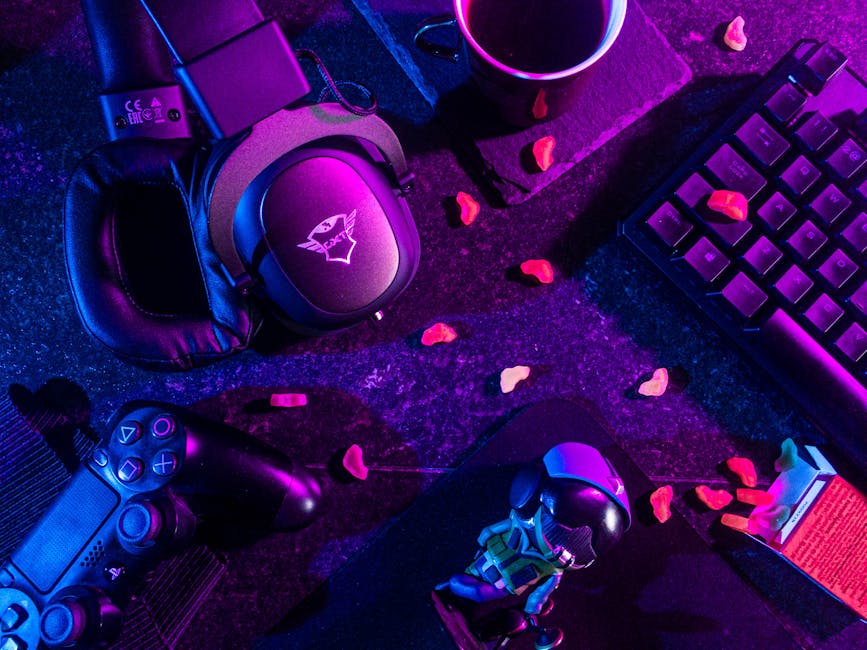
What Makes Munjoff1445 MODS Stand Out
The Munjoff1445 MODS aren’t just cosmetic tweaks or quality of life fixes. They change the texture of the game. Compared to standard versions, these MODS dive into the guts of gameplay adjusting weapon handling, ammo behavior, and in some cases, rewriting movement mechanics altogether. Some even alter the HUD to deliver more real time feedback that standard builds don’t offer.
Competitive players have taken notice for one key reason: control. These MODS give high skill users granular control that helps squeeze out micro advantages in high stakes matches. Techniques that were borderline possible in vanilla settings frame perfect reloads, hyper tuned strafing, responsive recoil resets are now trainable, repeatable, and in the hands of those who care enough to mod smartly.
What really shifts the game are the unique mechanics inside certain MODS. A few introduce dynamic momentum think variable acceleration curves depending on your gear loadout. Others bake in predictive pathing for projectiles, subtly shaving off reaction times. While none of this guarantees a win, they offer new layers of strategic depth players can exploit and master. They’re not breaking the game they’re bending it with precision.
Competitive Scene Integration
Titles Seeing the Most MOD Activity
Munjoff1445 MODS aren’t just experimental some of them are actively reshaping competitive gameplay across multiple esports.
FPS Franchises: Titles like Valorant, CS:GO, and Overwatch have seen an uptick in MOD integration in private or semi competitive matches. MODS that enhance HUD customization or refine recoil patterns are especially popular.
Battle Royale Games: Apex Legends and PUBG servers now sport community driven MODS that tweak loot spawn rates and movement physics.
MOBA and RTS Spaces: While less frequent, games like StarCraft II and Dota 2 have seen niche MODS that adjust camera angles or add pre match analytics tools for strategizing.
Tournament Rules: What’s Allowed vs. What’s Banned
With MODS entering the meta, regulation has become a major talking point for organizers. Most major tournaments still maintain strict baseline rules, but indie circuits and private leagues are more flexible.
Allowed:
Visual enhancements that don’t affect mechanics (e.g., UI themes, hitmarker skins)
Quality of life MODS like map overlays or streamlined communication plugins
Banned:
Any MOD altering hitboxes, damage values, or movement speed
Scripts that give players automated timing or aim assistance
MODS incompatible with official game servers
Tournament directors are beginning to distinguish between gameplay enhancing MODS and those that manipulate core balance.
Team Strategy in MOD Heavy Metas
High level teams aren’t just adapting they’re building entire strategies around MOD usage. MOD inclusive practices now include everything from training regimens to post match analysis.
Key shifts include:
Custom Practice Environments: Teams are using MODS to simulate specific scenarios (e.g., low visibility rounds or alternate weapon balancing).
Strategy Layering: Advanced MODS can introduce timed environmental changes, pushing teams toward adaptable, mid round adjustments.
Role Optimization: Some MODS feed real time performance data, helping coaches assign roles based on live in match metrics rather than after action reviews.
MODS are no longer fringe tools they’re part of the competitive meta for teams looking to out think and out adapt the competition.
Meta Shifts Driven by Munjoff1445
Munjoff1445 MODs aren’t just cosmetic tweaks they’re rewriting how competitive players think about loadouts, balance, and movement. At the core, these MODs give players new layers of control over gear selection, often bypassing traditional class restrictions or cooldown structures. You get more granular customization options, with weapons modded for recoil attenuation or armor tweaked for passive buffs. It’s not just about picking strong gear anymore it’s about tailoring every variable to your playstyle.
Balance, of course, takes a hit. Some MODs tilt metas hard in favor of aggressive rush down tactics or long range control, depending on which maps and assets are in play. Devs scramble to adjust, but the MOD community often stays one step ahead, pushing unofficial patches and alternate balances. That alone keeps players in constant adaptation mode.
Movement mechanics have shifted, too. Advanced MODs now allow for frictionless wall bounces, tighter cornering on slides, and even post dodge stabilization to keep scope alignment intact. These micro adjustments have made speed and timing critical not only for offense, but for survival.
Tactic wise, entire team strats are evolving. One mod combo that stood out early this year? The “Silent Cloak + Blade Switch” setup basically letting players ghost behind lines and hit melee crits before a sound byte even plays. It flipped the tempo of multiple tournament matches, forcing teams to rethink their defense shells.
The message is clear: Munjoff1445 MODs aren’t just tuning gameplay they’re overhauling it. Adapt or fall behind.
Risks, Controversies, and Regulation
MOD culture isn’t just about pushing limits it’s also raising eyebrows. As Munjoff1445 MODS continue creeping into competitive play, concerns around fairness and accessibility are getting louder. Not every player has the time, gear, or tech fluency to mod at the same level, making elite setups feel like a pay to win shortcut. And when frames, inputs, or HUD overlays swing match outcomes, it’s no longer just about skill.
Developers have taken notice. Some are embedding stricter anti cheat protocols, others are turning to their communities setting up feedback channels or crowdsourced moderation models. Transparency is key, but it’s a juggling act: allow innovation without letting it burn the rulebook.
Then there’s the grey zone the MODs that alter just enough to edge performance without crossing a technical line. Is a faster reload animation a quality of life tweak or a stealth buff? Where’s the cutoff between smart enhancement and soft cheat?
Right now, it varies by game and league. But if MODs like Munjoff1445 are going to be part of the competitive future, expect more hard conversations, clearer boundaries and a lot more scrutiny.
Staying Updated
Keeping your Munjoff1445 MODs current isn’t just a good habit it’s mandatory if you want to stay relevant in the competitive scene. Mods that worked flawlessly last month might crash or become dysfunctional after the latest patch. So first rule: update often. Set up a weekly check in if you have to. Don’t assume stability.
Next, manage versioning like a pro. Back up older MOD builds before a system upgrade, especially if you’re running a custom loader. Some updates aren’t just tweaks they can break entire mod frameworks. Compatibility issues can sneak in quietly, and suddenly your inputs lag or your loadout locks mid match. That’s dead weight when fractions of seconds count.
And here’s a simple but overlooked trick: bookmark the Munjoff1445 update patch page. It’s the hub for changelogs, compatibility notes, and hotfixes. Following that one source can save you from hours of troubleshooting and keep you ahead of stealth rollouts that others miss.
Bottom line treat your mod maintenance like your gear setup. Tight, timely, and tuned to the current meta.
Final Look at Utility vs. Exploitation
Walking the Line: Enhancement vs. Exploitation
As MODs get more advanced, the line between helpful tools and unfair advantages continues to blur. Some Munjoff1445 MODS enhance gameplay by improving UI clarity, streamlining controller inputs, or offering cosmetic changes. But others alter core mechanics like recoil, hitboxes, or timing windows potentially pushing into exploit territory.
Enhancement focused MODS: Quality of life improvements that don’t impact competitive balance
High risk MODS: Tweaks that manipulate movement mechanics or ability cooldowns
Gray area MODS: Mods that may be tolerated in casual play but are banned in ranked or pro circuits
Why MOD Strategy is Now a Pro Level Skill
In today’s meta, understanding which MODS to use and when is becoming a skill that sets elite players apart. Competitive players aren’t just customizing looks; they’re optimizing reaction windows, server sync times, and aim assist behaviors through deliberate MOD use.
Players now train with specific MOD sets for given matchups
Teams experiment with MOD configurations as part of scrim prep
Coach and analyst roles increasingly include MOD optimization
MOD Literacy is a Game Changer
Much like map knowledge or character mastery, knowing how to read, update, and configure MODS is now part of the skill ceiling. Casual players may overlook MOD functionality, while top tier participants configure them with surgical precision.
MOD literacy includes understanding what’s legal vs. exploitable
Effective use of MOD changelogs can offer sneak previews into meta shifts
Staying informed can help players avoid bans or disqualifications
Stay Updated to Stay Competitive
The best way to avoid falling behind technically or competitively is to stay updated.
Keep an eye on official tournament rulebooks
Recheck compatibility after each patch or title update
Bookmark the Munjoff1445 update patch for the latest refinements and guidance
Smart MOD use isn’t just about pushing boundaries it’s about understanding the game at a deeper level.